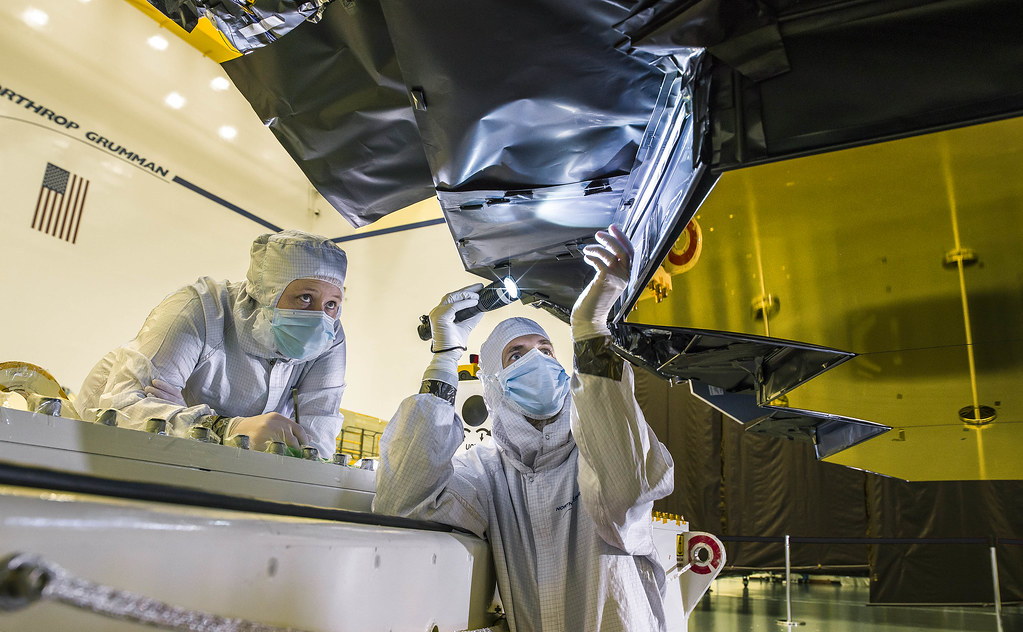




Far-Infrared Telescope is set to revolutionize our understanding of the universe. NASA has officially selected this innovative instrument as the first in a new class of missions.
What is the Far-Infrared Telescope?
The Far-Infrared Telescope is an innovative space observatory designed to explore the universe in the far-infrared spectrum. This new mission class represents a significant advancement in our ability to study celestial phenomena that are often obscured by dust and gas, which are common in many astronomical environments.
Unlike traditional telescopes that primarily observe in visible light or radio waves, the Far-Infrared Telescope will focus on wavelengths from 20 to 200 microns. This range allows scientists to gain insights into various cosmic occurrences, including:
- Star formation in dense molecular clouds
- The atmospheres of exoplanets
- The early stages of galaxy formation
- Interstellar dust and its impact on the evolution of galaxies
The mission aims to enhance our understanding of the universe by capturing images and data that have been previously difficult to obtain. Equipped with advanced technology, the Far-Infrared Telescope will provide a unique perspective on previously hidden celestial bodies and phenomena.
By unveiling the mysteries of the far-infrared universe, this mission holds the potential to revolutionize our knowledge of cosmic structures and processes, paving the way for future discoveries in astrophysics and beyond.
NASA’s Mission Goals
NASA has outlined several ambitious goals for its Far-Infrared Telescope mission, which represent a significant step forward in space exploration and astronomical research. The primary objective of this mission is to explore the universe’s coldest regions, where stars and planetary systems are born. By utilizing advanced far-infrared technology, the telescope aims to detect and analyze cosmic phenomena that are often invisible to optical telescopes.
Among the key goals of the mission are:
- Mapping Star Formation: The telescope will provide detailed maps of areas where new stars are forming, allowing scientists to understand the processes that contribute to star development.
- Studying Exoplanets: By examining the atmospheres of distant exoplanets, the Far-Infrared Telescope hopes to identify potential signs of habitability and the presence of organic molecules.
- Investigating Cosmic Dust: Understanding the role of cosmic dust in the formation of stars and planets is critical, and this mission will focus on characterizing dust in various environments across the universe.
- Uncovering Dark Matter and Energy: The telescope will help unravel the mysteries surrounding dark matter and dark energy, which are crucial to comprehending the universe’s structure and expansion.
These goals highlight the mission’s potential to reshape our understanding of the cosmos and enhance our knowledge of fundamental astrophysical processes.
Technological Innovations in Space
The Far-Infrared Telescope represents a significant leap in technological innovations aimed at enhancing our understanding of the universe. This cutting-edge instrument is designed to operate in the far-infrared spectrum, allowing scientists to explore celestial phenomena that are often obscured by dust and gas. Its advanced sensors will facilitate observation of the earliest galaxies, star formation, and the chemical composition of distant cosmic objects.
One of the standout features of the Far-Infrared Telescope is its ability to detect faint signals from the cosmos. Utilizing a combination of highly sensitive detectors and sophisticated cooling systems, it can capture data that was previously unattainable. This capability is crucial for studying phenomena such as:
- Star Formation: Understanding how stars are born in dense molecular clouds.
- Galactic Evolution: Tracing the development of galaxies over billions of years.
- Exoplanet Atmospheres: Analyzing the chemical signatures of atmospheres around distant planets.
Moreover, the Far-Infrared Telescope will leverage innovative technology to maintain stability and precision during observations. Its design includes a unique mirror system that minimizes distortion, ensuring that the data collected is both accurate and reliable. With these advancements, the mission is poised to unlock new frontiers in astrophysics and provide invaluable insights into the workings of our universe.
Impact on Astronomy
The selection of the Far-Infrared Telescope as NASA’s first mission in a new class is set to have a profound impact on the field of astronomy. This innovative project aims to unlock secrets of the universe that have remained hidden due to the limitations of existing technology.
By focusing on the far-infrared spectrum, this telescope will allow scientists to study celestial phenomena that emit heat rather than light. This capability is crucial for observing:
- Star formation in dense clouds of gas and dust, where visible light cannot penetrate.
- Galactic evolution as it captures the intricate processes occurring in distant galaxies.
- Exoplanet atmospheres, providing insights into their composition and potential habitability.
The telescope’s advanced technologies promise to enhance observational capabilities, enabling astronomers to gather data with unprecedented clarity and detail. Furthermore, the mission is expected to foster collaboration between scientists worldwide, as the findings will likely lead to new theories and discoveries.
As the Far-Infrared Telescope embarks on its ambitious journey, it symbolizes a significant leap forward in our quest to understand the universe, potentially reshaping our knowledge of cosmic history and the fundamental processes that govern it.
Future of Space Exploration
The future of space exploration is bright with the introduction of the Far-Infrared Telescope, a mission that promises to revolutionize our understanding of the universe. As NASA embarks on this ambitious journey, the implications of this cutting-edge technology extend far beyond simple observations.
One of the key components of the Far-Infrared Telescope is its ability to peer into the cold, dark regions of space, where traditional telescopes often struggle. This capability will allow scientists to study the formation of stars and planets in unprecedented detail. The telescope’s advanced sensors will gather data on the chemical compositions of celestial objects, providing insights into the origins of life itself.
Moreover, the Far-Infrared Telescope is poised to enhance our understanding of cosmic phenomena, such as dark matter and dark energy, which remain some of the universe’s biggest mysteries. By analyzing the faint signals emitted from these elusive elements, researchers hope to unlock new theories about the structure and evolution of the cosmos.
As NASA continues to develop this groundbreaking mission, the Far-Infrared Telescope stands at the forefront of a new era in space exploration. Its potential to reshape our knowledge and inspire future generations of scientists is limitless, making it a vital tool in the quest to explore the final frontier.
By NASA Goddard Photo and Video via Openverse
Sources
Related stories
- MDA Space stock: Best Proven Growth Drivers Ahead
- Meta VR Glasses: Is the Price Worth It? Proven Features Inside
- Logitech G New Products: Best Unveiling at PLAY 2026