




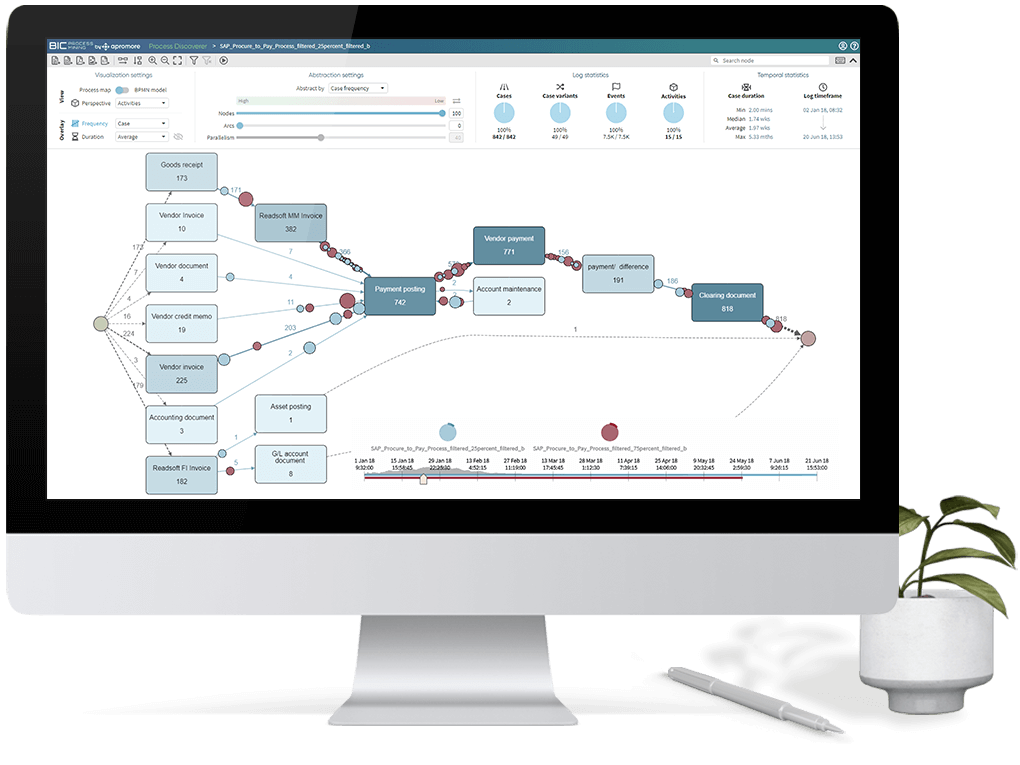
Imagine standing in front of a massive, intricate machine—each cog turning, each piston moving, but you can’t see the full mechanism at once. You only hear the hum, see the output, and sense that something could be working smoothly. Process mining is like donning a pair of X-ray glasses that reveal the inner workings of this machine, showing how every process truly unfolds in real time.
Instead of relying on assumptions or documentation that may be outdated, process mining uncovers what actually happens in a system. It exposes inefficiencies, bottlenecks, and shortcuts that might otherwise stay hidden.
Understanding the Core of Process Mining
At its heart, process mining bridges the gap between business operations and data science. Every action within an IT system—whether it’s approving a request, making a payment, or resolving a ticket—leaves a trace known as an event log. These logs are the breadcrumbs that map how work really flows through an organisation.
By collecting and analysing these event logs, process mining reconstructs the “as-is” process model. Unlike static flowcharts that show how things should work, this model reflects how they actually work. It is a mirror of reality—complete with all its deviations and inefficiencies.
Professionals seeking to master this kind of analytical precision often find that enrolling in a business analyst course in Chennai helps them connect theory with practical business problem-solving.
From Hidden Chaos to Visible Patterns
In many organisations, the difference between expected and actual workflows is enormous. Teams may unknowingly skip steps, use manual workarounds, or process requests in non-standard ways.
Process mining tools visualise these variations. They take gigabytes of system logs and translate them into intuitive process maps, showing paths that are frequent, rare, or problematic. For instance, a bank might discover that loan approvals sometimes bypass a required review stage, or an e-commerce firm might notice unnecessary loops in order fulfilment.
Through such insights, leaders can pinpoint where automation, standardisation, or policy adjustments are most needed. The clarity that process mining brings can turn confusion into confidence.
Discovery, Conformance, and Enhancement: The Three Pillars
Process mining isn’t a single technique but a family of methods with distinct goals:
- Process Discovery: Automatically creates a model from raw event logs, showing the real workflow without prior assumptions.
- Conformance Checking: Compares the discovered process with the intended one to identify compliance gaps.
- Process Enhancement: Uses insights from mining to refine and optimise existing workflows.
These pillars help companies evolve from reactive management to proactive improvement. Analysts can track how process changes affect outcomes and iterate continuously, much like tuning an engine for peak performance.
For anyone keen to master such advanced analytical frameworks, the practical modules within a business analyst course in Chennai often include hands-on experience with process mining tools like Celonis, Disco, or UiPath Process Mining.
Applications Across Industries
Process mining has moved far beyond the tech world—it’s now a strategic tool across industries. In healthcare, it helps hospitals reduce patient waiting times and optimise resource allocation. In manufacturing, it detects production delays before they snowball into costly downtime. In retail, it refines supply chain coordination by revealing exactly where delays occur.
Even public sector agencies are adopting process mining to enhance transparency, ensure compliance, and improve citizen services. Wherever there’s a sequence of digital steps, there’s potential to mine data for insight.
Challenges and Ethical Considerations
Despite its power, process mining comes with challenges. Data quality is the most critical factor—event logs must be complete and correctly formatted to produce accurate models. Additionally, privacy concerns arise when analysing processes involving personal or sensitive information.
Organisations must establish robust governance frameworks and ensure transparency in how data is used. Ethical handling of process data ensures that improvements do not come at the cost of employee trust or confidentiality.
Conclusion
Process mining is more than a diagnostic tool—it’s a revelation. It allows organisations to see themselves clearly, free from the distortions of assumption or bias. By combining data science and business intuition, it transforms ordinary logs into extraordinary insight.
As businesses seek agility and excellence, discovering hidden inefficiencies provides a competitive edge. For professionals entering this field, developing skills through structured learning—such as a [specific program]—can be the key to transforming raw data into real-world impact.
Just as an explorer relies on a map to navigate unknown terrain, modern analysts depend on process mining to chart the path toward smarter, more transparent, and more efficient operations.
 Justin Nguyen